
Today we remember Hans Vaihinger

Today we remember Hans Vaihinger, who died on December 18, 1933.
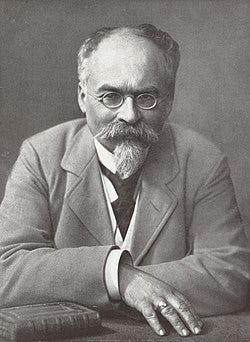
He was a German philosopher best known for one idea that refuses to go away: the philosophy of “as if.” This wasn’t fancy speculation, it was a bold claim about how human minds actually survive uncertainty.
Vaihinger noticed that we use ideas all the time that we know aren’t strictly true, but we act “as if” they are because life demands action before certainty arrives. He didn’t just describe a trick of language, he made it the foundation of thought itself.
Most philosophy assumes we search for truth. Vaihinger asked a braver question:
What happens when we admit to ourselves that some of our most useful ideas aren’t literally true and yet shape our lives anyway?
His insight:
Human reason does not always follow truth, sometimes it follows viability.
Life is full of fictions that are not errors, but functional constructs that help us navigate an uncertain world.
Think about money, an agreed fiction. Think about promises, invisible until they’re broken. Think about identity itself, a story you act as if is continuous. None of these are facts in the scientific sense, yet all are essential to how we live. Vaihinger said our minds are built for action first, certainty second, if ever.
So here’s the lesson:
- Some truths are only true when you act “as if” they matter.
- Belief isn’t just about accuracy, it’s about sustainability.
- Certainty can be the enemy of effective life, not its ally.
This isn’t cowardice, it’s mental evolution. We don’t wait for perfect clarity before we walk, speak, love, or decide. We build working truths and adjust as we go. Vaihinger named this not illusion, but the art of intelligence.
Ask yourself: What do you act “as if” is real, even if you’re not sure it is, and how does that shape your life more than what you claim to know?
If you want reflections like this, not comforting answers but thought that changes how you think, support Phi. Your support helps keep philosophy alive in a world that treats uncertainty like a defeat instead of a doorway.